Audru e-fuels plant will produce hydrogen and use it to synthesize e-fuels Read more about e-fuels
Up to 300 MW
Planned production capacity
Up to 30 000 tonnes
of green hydrogen per year
Up to 160 000 tonnes
Selected e-fuels per year

Project information

To ensure energy security, Europe needs solutions that help reduce dependence on imported fossil fuels. The main answer lies in electrification, but in some sectors it is not the most effective solution. There is a need to switch to e-fuels, which can be produced in Europe from local feedstock.

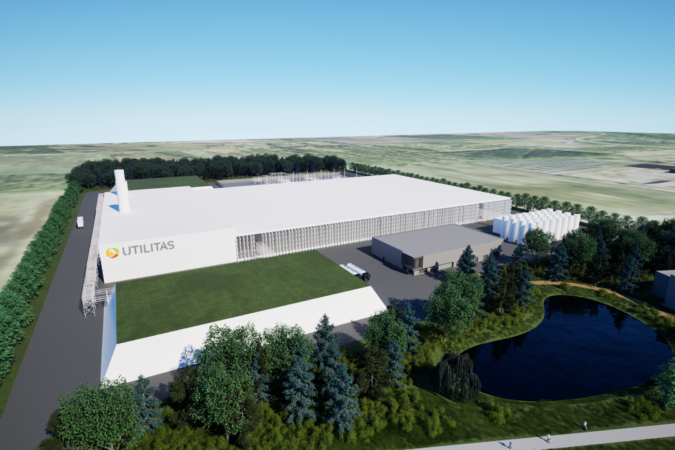
The Audru e-fuels plant planned for Pärnu County will produce hydrogen in the electrolysis process and synthesize e-fuels, such as e-methanol, e-methane or aviation fuel, from it. The maximum planned production capacity of the project is up to 300 MW, which could be used to produce up to 30,000 tonnes of green hydrogen and up to 160,000 tonnes of selected e-fuel per year.

In 2026, a detailed plan for the plant was initiated, and in parallel, a strategic environmental assessment will be carried out, which will assess the potential impacts of the activities on nature and the living environment.

Similar e-fuel plants are already operating in Denmark, Finland and Norway, for example. Their products are used by international companies such as Maersk, LEGO and Novo Nordisk.

Project timeline

  • 2024
    Start of development of the e-fuels project

    Start of development of the e-fuels project

  • 2026
    Initiation of the detailed plan

    Initiation of the detailed plan

  • 2026-2028
    Preparation of the plan

    Environmental impact assessment, conducting studies, and developing the planning solution

  • 2029-2031
    Design and construction

    Design and construction

  • 2031+
    Start of e-fuel production

    Start of e-fuel production

The development of the project is co-financed by the European Union.


Funded by the European Union. However, the views and opinions expressed are those of the author(s) only and do not necessarily reflect those of the European Union or the European Climate, Infrastructure and Environment Executive Agency. Neither the European Union nor the donor can be held responsible for them.


What are e-fuels?

E-fuels are produced using electrolysis, which means that an electric current is passed through water to produce hydrogen and oxygen. From the resulting hydrogen, methanol, SAF or methane is further synthesized with the added CO2. The oxygen generated during the process can be used in hospitals, wastewater treatment, industrial processes or directed to the air.

This technology will help replace fossil fuels, in particular in sectors where electrification is not feasible or possible, such as maritime, aerospace or steel production, and will create opportunities for carbon sequestration and recycling from biomass.

Exporting e-fuels would help increase the competitiveness of the Estonian economy. In addition, it is an opportunity to add value to and store locally produced electricity, as e-fuels can be efficiently stored and transported.

E-methane is chemically the same substance as the main component of natural gas, methane, which has the formula CH₄. The difference is that e-methane is made from green hydrogen and carbon dioxide, so it can be used as a substitute for fossil natural gas in existing gas infrastructure. E-methane can be used, for example, to produce electricity and heat, in the gas network or in transport.

E-methanol is the simplest form of alcohol with the chemical formula CH₃OH. It can be made from green hydrogen and carbon dioxide. Methanol is already a widely used raw material for the chemical industry in the world today, and it is increasingly seen as an alternative fuel for shipping. The advantage of e-methanol is that it is a liquid in its normal state and is easier to store and transport compared to hydrogen. In shipping, methanol is seen as one of the main e-fuels, for which special ships and port infrastructure is already being built.

E-SAF is a synthetic sustainable aviation fuel that can be produced from green hydrogen and carbon dioxide. E-SAF, or kerosene, is not a single molecule like methane or methanol, but a mixture of hydrocarbons that fits into the quality requirements of Jet A-1 in aviation.

Environment

During the development process of the plant, a thorough strategic environmental assessment will be carried out with all the necessary studies and modelling (including water, noise, safety, rainwater, etc.). The aim is to prevent the occurrence of a significant negative impact on the environment and human health.

The plant needs an average of 900 m3 of production water per day to produce hydrogen. In the course of the environmental impact assessment, all the necessary studies will be carried out, after which the final choice and solution of the water source will be determined. The chosen solution must not affect the availability or quality of drinking water for local residents.

Community

Hundreds of new jobs will be created during the construction of the plant, and 20 to 40 permanent jobs will be created during operation, including for engineers, operators, IT specialists and management. Indirectly, the project also supports the local economy and the service sector.

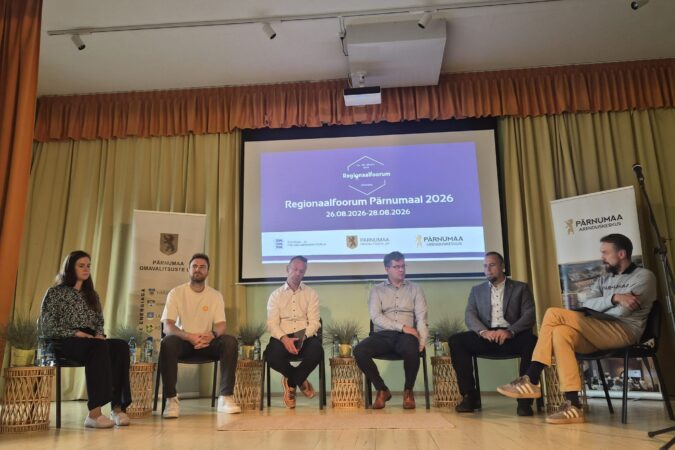
Throughout the development process, there is regular communication with the community, including public discussions, sharing information and collecting feedback. Various topics and expectations related to the development of the region have emerged in the meetings so far. In the course of further project development, we want to take into account the feedback of the local community and discuss the possibilities of how the project could contribute positively to the development of the area and the living environment.

Frequently Asked Questions

The Lemmetsa area is suitable for the location of such a production unit, as it is classified as industrial land according to the general municipal plan and also an established production area where several companies are already operating. The plant needs an area of approximately 20 hectares. In addition, a new Harku–Lihula–Sindi 330/110 kV high-voltage line passes through the property, which creates suitable conditions for the construction of a large-scale electricity connection. Audru is logistically located in a good location near the planned Rail Baltica as welll as the existing Via Baltica, and there are various possible water supply solutions in the area. Proximity to the city of Pärnu is also important, as the project would create dozens new jobs, most of them for highly qualified specialists.

Studies and planning proceedings can take several years. The goal is to reach an investment decision in 2028-2029, with the support of which the plant could start operating in 2030-2032.

The planning procedure is a public process in which the residents of the area and other parties are involved. During the development of the project, we are in dialogue with the local community to map expectations and questions and discuss how the project could contribute to the development of the region.

In the course of the environmental impact assessment and preparation of the plan, noise, odour and visual disturbance are assessed, among other things. A noise assessment will be carried out, which will take into account the possible noise accompanying the operation of the plant, including traffic noise. During the construction and operation of the plant, compliance with the applicable norm levels must be ensured.

The substances used in the factory (e.g. hydrogen, methanol, CO₂) are odourless, so odour nuisance is not foreseen.

The visual impact will be assessed during the preparation of the detailed plan, including possible 3D visualizations and finding a suitable landscaping solution in cooperation with landscape architects.

So far, no industrial e-fuel plant has been established in Estonia. However, Estonia already has experience in the production of green hydrogen: Utilitas produces green hydrogen at the Väo energy complex in Tallinn. Stargate Hydrogen, a manufacturer of hydrogen technology, also operates in Estonia, which develops and manufactures electrolysers. Thus, the Audru project would be the first of its kind in Estonia to produce e-fuels based on world-renowned industrial processes.

Potential customers are companies in the maritime, aviation, logistics, industrial and defence sectors both in Estonia and abroad. E-methanol can be used as marine fuel and as an input to the chemical industry, e-SAF as aviation fuel, and e-methane as a replacement to the existing natural gas. Internationally, e-fuel users and buyers include, for example, Maersk, Hapag-Lloyd, Novo Nordisk and LEGO.

Based on the existing studies, the average water requirement is about 900 m3 per day, which is about 10% of the current water consumption of the city of Pärnu (8600 m3 per day) and 6% of the confirmed groundwater supply of Pärnu central water. The amount of water required is comparable to that of the food industry, e.g. domestic dairy and breweries. In terms of water sources, the options include connecting to the central water of Pärnu, establishing existing or new groundwater intakes, as well as water abstraction from the local wastewater treatment plant, the Sauga River, and seawater.

The safety of the plant is thoroughly assessed in the course of planning, SEA, chemical risk analysis and design. Approximately 100 million tonnes of hydrogen are produced globally every year, and there are many larger-than-planned hydrogen-using industrial complexes operating in Europe. What makes Audru project stand out is that hydrogen would be produced from electricity, not natural gas. Depending on the final quantities of substances, the plant will be a category A or B company with a major accident risk, which is subject to strict requirements from the Rescue Board, the Consumer Protection and Regulatory Authority and chemical safety. The initial risk assessment shows that the calculated danger areas do not extend to the nearest residential or public buildings.

News

Contact

Utilitas Wind is one of the region’s leading renewable energy developers. Our portfolio includes wind farms and battery energy storage projects across the Baltics. Utilitas Wind’s mission is to increase renewable energy production across all its core markets – Estonia, Latvia and Lithuania.

Our main focus is on wind energy projects, while we also develop energy storage and e-fuel production solutions.

OÜ Utilitas Wind is owned by OÜ Utilitas, Estonia’s leading producer of renewable heat and electricity and provider of district heating and cooling services, and UG Investments OÜ, an Estonian-owned investment holding company that primarily invests in sustainable businesses with strong export potential.

team image
Jüri-Mikk Udam
Development Manager of Hydrogen Solutions
juri-mikk.udam@utilitas.ee
team image
Rene Tammist
Chairman of the Management Board
rene.tammist@utilitas.ee
team image
Kristiina Nauts
Head of Development
kristiina.nauts@utilitas.ee
team image
Mairika Kõlvart
Environmental expert
mairika.kolvart@utilitas.ee